Charting loyalty tiers that reshape payout structures across multi-sport accumulator plays and digital table games
Henrik Schröder · Aug 15, 2026
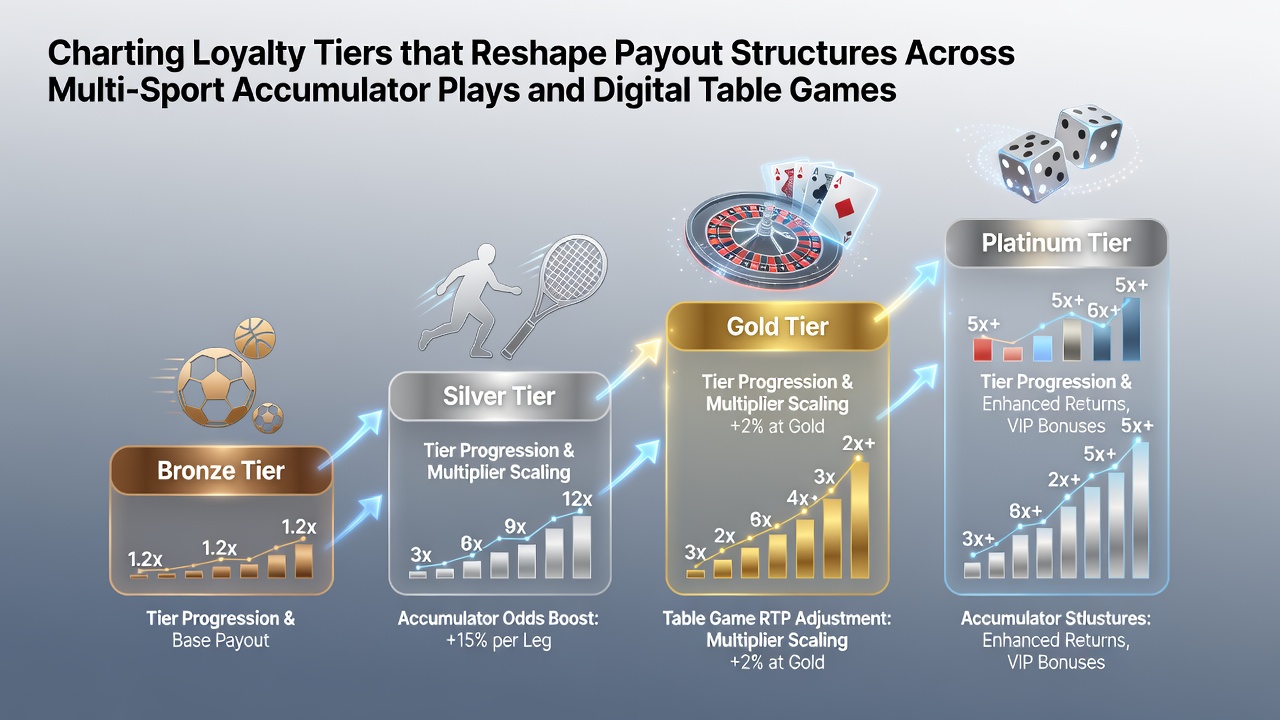
Charting loyalty tiers that reshape payout structures across multi-sport accumulator plays and digital table games
Operators across the betting sector have developed structured loyalty programs that adjust payout percentages based on player activity levels, and these systems now directly influence returns on multi-sport accumulators along with digital table game sessions. Data from industry tracking services shows tier progression typically begins with entry-level access and advances through intermediate and premium categories, each unlocking incremental enhancements to base odds and house edge reductions.Core mechanics of tiered loyalty systems
Players accumulate points through wager volume and frequency, which then determine placement within bronze, silver, gold, or platinum categories, and these classifications trigger automatic adjustments to payout formulas, according to reports from the American Gaming Association. Higher tiers often apply multiplier effects to accumulator returns, where a three-leg multi-sport bet might receive an elevated payout coefficient compared to standard rates, while digital table games such as virtual blackjack or roulette see reduced commission structures that increase net player retention over repeated plays.
Research conducted by the University of Nevada's International Gaming Institute indicates that operators recalibrate these structures periodically to balance retention metrics with revenue targets, and August 2026 marks the scheduled rollout of updated algorithms in several major platforms that further differentiate accumulator bonuses from table game rebates. Those who monitor these changes observe that accumulator plays spanning football, basketball, and tennis receive tier-specific boosts that compound across legs, whereas table game adjustments focus on per-hand or per-spin modifiers tied directly to loyalty status.
Accumulator plays and tier-driven payout adjustments
Multi-sport accumulators benefit from tiered enhancements because operators apply progressive multipliers that scale with loyalty level, turning a standard four-leg parlay into one with amplified decimal returns once a player reaches gold status or above. Figures released by regulatory bodies in Australia demonstrate that such modifications can increase effective payout rates by measurable percentages without altering underlying event probabilities, and this approach encourages sustained cross-sport betting patterns.
One documented case involved a platform that introduced silver-tier access granting a 2 percent uplift on accumulator totals, while platinum members received an additional layer that reduced the standard margin on combined selections, and analysts note these adjustments maintain regulatory compliance while reshaping long-term player economics. Observers tracking August 2026 updates report that several operators plan to integrate real-time tier recalculations during live accumulator building sessions, allowing players to see projected payout shifts as their loyalty points accumulate mid-week.

Digital table games and loyalty-linked edge modifications
Digital table game offerings, including online roulette variants and blackjack tables, incorporate loyalty tiers through customized return-to-player percentages that improve as status advances, and this mechanism differs from accumulator adjustments by focusing on individual round outcomes rather than combined selections. Evidence from Canadian provincial gaming reports highlights how platinum-tier players encounter lowered house edges on automated table sessions, resulting in higher expected values across extended play periods.
Platform data further reveals that operators link these table game benefits to accumulator activity, creating crossover incentives where points earned from multi-sport bets accelerate progression toward table-specific rebates, and such integration has become more pronounced ahead of the August 2026 framework revisions. Those analyzing payout distributions find that intermediate tiers typically unlock modest edge reductions, while top categories deliver compounded effects that apply across both accumulator structures and digital table environments simultaneously.
Tracking developments through 2026
Industry reports compiled ahead of August 2026 show operators refining tier thresholds to accommodate evolving player behaviors, with particular emphasis on how accumulator volume influences table game access speeds, and these refinements appear in revised terms that specify exact multiplier values per tier. External analyses from the European Gaming and Betting Association confirm that transparent disclosure of these payout structures helps maintain player engagement without introducing variability outside stated parameters.
Conclusion
Loyalty tier frameworks continue to evolve by linking multi-sport accumulator enhancements directly to digital table game modifications, and the patterns observed through mid-2026 indicate sustained emphasis on graduated payout adjustments that scale with documented activity levels. Platforms implementing these systems provide clear metrics for progression, allowing participants to anticipate structural changes in returns across both betting formats as tier status advances.